Friday, 7 February 2014

NNPC contains fire outbreak at its Kaduna Refinery

The Nigerian National Petroleum Corporation (NNPC) Thursday said that a fire incident that earlier broke out at the truck park of its  Kaduna Refinery has been brought under control.
It said in a statement in Abuja that the fire which consumed two tankers and also led to injuries for two persons was swiftly controlled, adding that production and distribution of petroleum products from the refinery will not be affected by the development.
The statement was signed by its acting Group General Manager, Public Affairs, Dr. Omar Farouk Ibrahim who also hinted that investigation to determine the cause of the inferno was underway.

Wednesday, 5 February 2014

Tanzania’s TPDC upbeat on gas pipeline

The over 530-kilometre gas pipeline linking the gas-rich southern region of Mtwara and the port city of Dar es Salaam will start by transporting 210 million standard cubic feet (mmscfd) daily when it is commissioned in December, this year.
In an interview with the ‘Daily News,’ the Tanzania Petroleum Development Corporation (TPDC) spokesperson, Mr Sebastian Shana, pointed out that since the completion of the work on the laying of the pipeline is scheduled for the beginning of December, the three gas plants would be commissioned at the end of the month.
“The pipeline will first tap from the three wells in Mtwara, with each giving 210mmscfd,” he said. The major domestic gas production and transportation project will likely transform the country’s economy, economists predict.

Uganda to increase power generation

The commissioning of the 250MW Bujagali Hydro Power dam in 2012 gave Uganda a sigh of relief given that the months preceding it, were characterized by widespread load-shedding.
This had grossly affected Uganda’s competitiveness as manufacturers and traders incurred high costs of operation because they resorted to using generators.
Statistics from Electricity Regulatory Authority (ERA) show that Uganda’s current total installed capacity is 682MW. Registered peak system demand in December 2013 stood at 503MW compared to 506MW in November.
However, the country needs to find additional sources of power given that the demand for electricity is growing at an annual rate of between 10-12%.

Oil market, other factors threaten Nigeria’s 2014 budget

The implementation of the nation’s 2014 budget has not yet started, as stakeholders, especially legislators continue to debate it. Udeme Akpan reports that developments in the global market and other factors constitute serious threat to the key budgetary assumptions and implementation of the budget.
Many nations, including Nigeria have come to over depend on their crude oil as the Egyptians look up their River Nile for agriculture and other purposes. Take the 2014 budget as an example. The Federal Government of Nigeria has already projected to base the implementation of its 2014 N4.77 trillion budget on oil reference price of $77.5 per barrel.
The budget which ordinarily should have been passed for implementation before now is still a subject of discourse at the National Assembly. Many legislators have picked holes on the budget. For instance, the government has been criticised for allocating more funds to some issues, including former Niger Delta militants than others. These and others are expected to be harmonised or resolved before the budget is passed for execution.

GE Africa, Standard Bank sign $350m partnership deal

Efforts to increase access to power infrastructure in Africa has received a boost with a US$350million financing agreement between global infrastructure giant General Electric and one of Africa’s leading financial institutions, Standard Bank.
The partnership seeks to provide affordable access to power infrastructure to augment traditional large scale grid capacity development.
The partnership will target 10 priority countries: Nigeria, Angola, Tanzania, South Africa and Ghana.
Others are Kenya, Mozambique, Uganda, Ethiopia and South Sudan. Financing activity will center on project finance, equipment finance, trade finance and advisory.
The program will be open to independent power producers and non-recourse infrastructure projects, industrials and manufacturers, natural resource companies, food and agricultural processors, small to medium enterprises, and other potential borrowers.

House C’ttee assures of PIB passage by year end

The Chairman of House of Representatives Committee on Petroleum Downstream, Peterside Dakuku, has revealed that the Petroleum Industry Bill (PIB) currently before the National Assembly would be passed before the end of this year.
Dakuku, who noted that the bill has passed first and second reading in the House of Representatives, made the revelations when he led members of the committee on an oversight function  to the Petroleum Equalisation Fund (Management) Board, (PEF) in Abuja, yesterday.
Meanwhile, the executive secretary of PEF, Mrs Adefunke Kasali, who received the committee, said the Board may begin to pay marketers one week after submission of their bridging claims as the introduction of ‘Project Aquila 2’ was intended to further fast-track payments.  
Calling on agencies in the oil and gas sector to gear up for re-positioning on how to fit into the new regime that PIB passage would usher in, Dakuku said the sector was almost in transition to another phase, which was post-PIB phase.

Marginal oil field bidders uncomfortable with guidelines

Interested bidders who are uncomfortable with the marginal field bid guidelines are piling pressure on the Presidency to prevail on the Department of Petroleum Resources, which is overseeing the exercise on behalf of the government, to review them.
The investors are said to be uncomfortable with portions of the guidelines which reduced the tenure of asset holding, which is now two years, as against five years in the previous exercise.
In the 2003 bid round, investors were allowed to hold the assets for five years. Many of them are still inactive on the assets they won, for want of technical and financial capacity.
One of the most contentious issues agitating the minds of some of  the investors is the statement allegedly made by  George Osahon, the director of  the DPR, to the effect that considerations would be given to new investors that are just coming into the business.
Some of those that already have assets and had thought that the new exercise would give them the opportunity to grow their businesses by getting more to their portfolios, are uncomfortable with this decision. Some of them are said to be pulling strings in the corridors of power, to ensure that they allowed to participate.

Tuesday, 4 February 2014

IOCs reconsider Niger Delta security, as MEND ups attack on JTF

International Oil Companies (IOCs) operating in Nigeria’s multi-billion dollars oil and gas industry, at the weekend, reconsidered the growing insecurity in Niger Delta-base of their operations.
This followed the claim by the Movement for the Emancipation of the Niger Delta (MEND) that it was responsible for the attack on the Joint Task Force (JTF) boat along Nembe-Bassanbiri waterways in Bayelsa State.
MEND, which has continued to bomb oil installations and engage government troops stationed in the region in skirmishes, is a splinter militant group that rejected the Federal Government’s amnesty in August 2009.

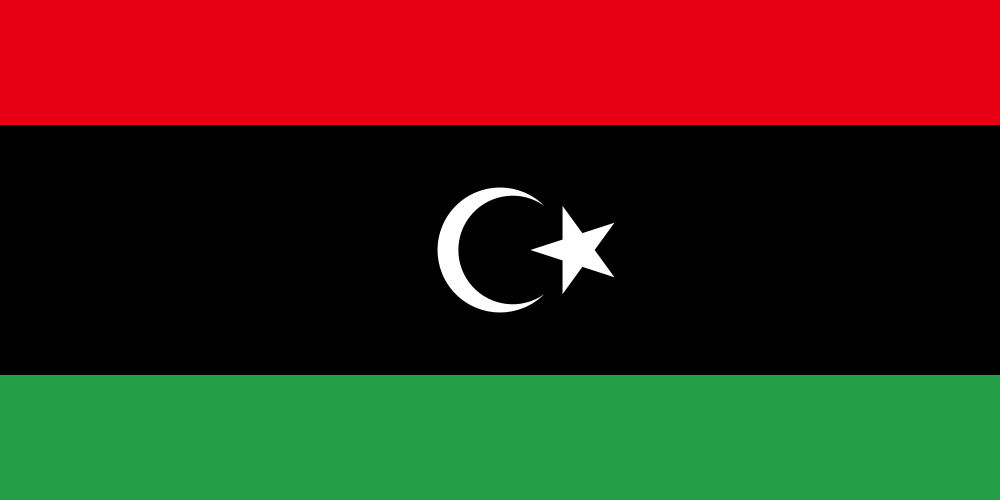
Libya threatens militants with army intervention

Libya has increased the pressure on militants occupying its eastern oil ports, by stating that the country’s military are standing by to intervene.
Libyan Prime Minister Ali Zeidan told reporters that the Libyan military were gearing up to end the occupation.
Militants are currently occupying 3 key ports on Libya’s Mediterranean coast. The ports at Ras Lanuf, Es Sider and Zuetina are crucial to the export of Libyan oil and their occupation is putting a 600,000 barrel per day strangle hold on the economy.
In recent weeks, Zeidan had appeared to favour diplomacy over military intervention as public support for the militants began to wane. His patience appears to be wearing thin though and military intervention looks more and more likely.
“Weeks ago we ordered the minister of defense to give his instructions to the chief of staff to move toward the occupied ports in the east. Now the matter is in the hands of the army command,” he said.
However, with much of Libya’s fledgling army still being trained, questions remain as to how swiftly they will be able to depose the militants. Diplomacy may yet prove to be the best option for both parties.

FG, IPMAN in fresh move to avert fuel crisis

The federal government appeared not to be sleeping over the warning by the Major Oil Marketers Association (MOMAM) that fuel crises was imminent, as it has taken fresh measures to nip the problem in the bud.
Following its determination to make petroleum products available across the country, government has engaged the Independent Petroleum Marketers Association (IPMAN) to bridge products from depots controlled by the Products and Pipeline Marketing Company (PPMC) , a subsidiary of the Nigerian National Petroleum Corporation (NNPC).
Confirming this development, the IPMAN has therefore urged its members to ensure that  they accessed products from PPMC depots across the country.
IPMAN has also advised the general public to avoid panic buying of fuel as it said that there was no impending  fuel scarcity in the country.
The national president of the association , Alhaji Aminu Abdulkadri, who gave the assurance in a media briefing in Lagos yesterday said with the latest arrangement, the fear of rumoured scarcity has been allayed. Abdulkadri said that there was stable fuel supply in the country, urging members of the public to avoid panic buying as there would  no longer be  any reason for that.